


Blogs
Chinese Remedies for Cold and Flu Recovery Strategies

May
Cold and flu season can be hard. But Traditional Chinese Medicine (TCM) offers helpful remedies. These remedies can help you prevent sickness, feel better, and recover faster. This also applies to problems like insomnia.
Traditional Chinese Medicine, or TCM, has over 2,000 years of experience. It uses herbal remedies, diet plans, and ways to heal. This method targets the root causes of health issues. It helps improve immunity and brings the body back to balance.
This guide includes important information and useful tips. It also shares research to help you deal with colds and the flu better.
Understanding Cold and Flu in Traditional Chinese Medicine (TCM)
TCM looks at colds and flu as problems with the body’s energy. These problems usually connect to outside factors like wind, cold, or heat.
Outside factors can hurt the body’s defensive Qi. They can also mess up the balance of Yin and Yang.
TCM wants to restore balance in your body. It offers treatments specially designed for you. These treatments focus on your unique symptoms and the key reasons behind them.
Key Concepts in TCM
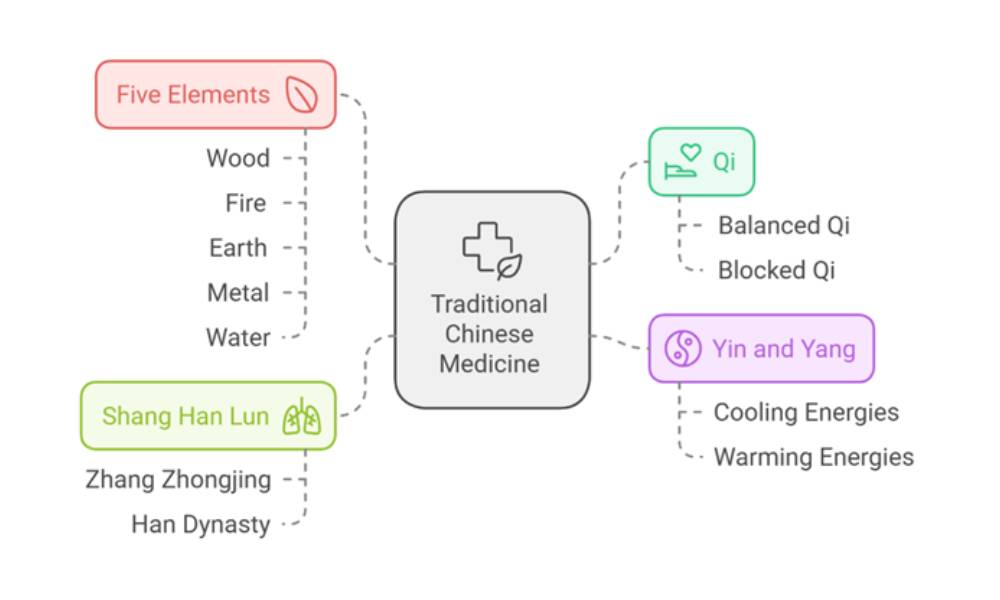
- Qi (氣): This is the key life energy that flows through our body. A good flow of Qi helps us feel healthy. If Qi gets blocked or is too low, it might lead to sickness.
- Yin and Yang: These are two opposing forces that show cold and warm energies. To be healthy, we need to balance Yin (which is cool and moist) and Yang (which is warm and active).
- Five Elements: These are Wood, Fire, Earth, Metal, and Water. They help us see how our body relates to the world around us.
Shang Han Lun, which means Treatise on Cold Damage, was created by Zhang Zhongjing in the Han Dynasty from 206 BC to 220 AD. This text began the practice of finding and treating breathing issues in TCM. Over time, this ancient knowledge has evolved into a complex system that combines traditional beliefs with modern research.
Cold and Flu Treatments from Traditional Chinese Medicine
Wind-Cold vs. Wind-Heat Symptoms
| Pattern | Symptoms | Approach |
| Wind-Cold | Chills, clear nasal discharge, body aches, lack of sweating, preference for warmth, and occasionally coughing up white phlegm. | Fever, sore throat, thick yellow nasal discharge, cough with yellow phlegm, thirst, preference for cool environments, including coughing up yellow mucus. |
| Wind-Heat | Fever, sore throat, thick yellow nasal discharge, cough with yellow phlegm, thirst, preference for cool environments | Clear heat, reduce inflammation, and soothe throat discomfort. |
Six External Pathogens
TCM describes six outside forces that can make you feel unwell. These forces are Wind, Cold, Heat, Dampness, Dryness, and Summer Heat. In China, Wind often brings other germs that cause sickness, like Cold or Heat. This affects how symptoms appear and how treatments are selected. Doctors usually recommend not eating dairy to prevent these health problems from getting worse.
Defensive Qi (Wei Qi)
Wei Qi, also known as protective qi, is the main defense of your body. It flows just beneath your skin. This qi helps guard against germs and supports the immune system. It also helps to open your pores. To increase your Wei Qi, you can try herbal remedies, eat healthy foods, and practice movements like Qi Gong. This is very important, especially during the cold and flu season, to help you stay well.
Keeping a balance between Yin and Yang is important for strong immune health and good digestion. Yin represents cooling and moisture, while Yang brings heat and energy. When this balance is off, it can make you more vulnerable to infections and impact your body fluids. This shows why holistic care matters so much.
Chinese Herbal Remedies for Cold and Flu
Herbal medicine is very important in TCM treatments for flu and colds. The remedies are made to match different symptoms. They help restore balance in the body.
Key Herbal Formulas
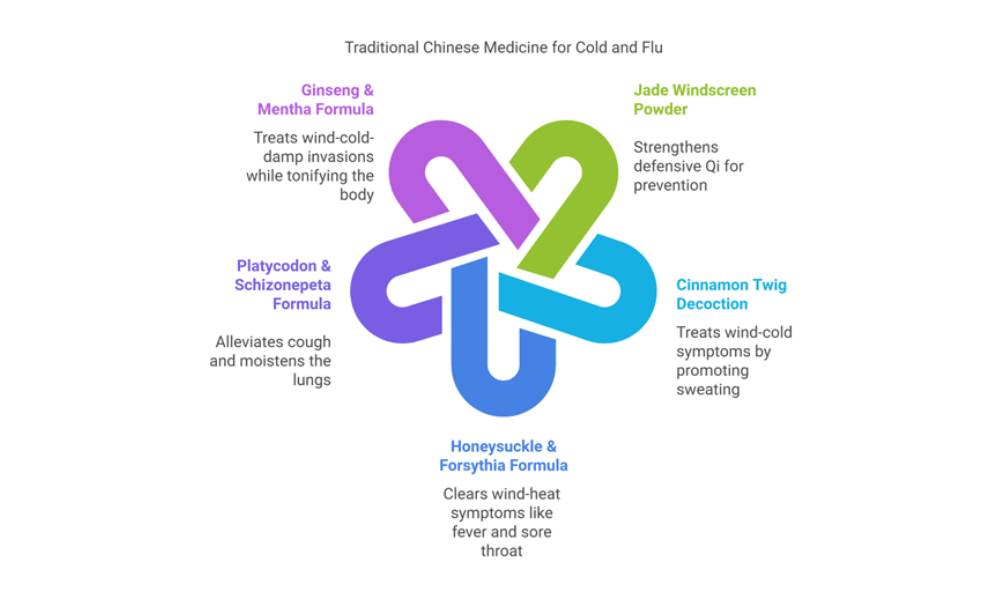
Jade Windscreen Powder (Yu Ping Feng San):
- Purpose: It helps boost Wei Qi to keep you healthy.
- Ingredients: Astragalus root (Huang Qi), White Atractylodes (Bai Zhu), Siler root (Fang Feng).
- Evidence: Research shows that using it often can lower the risk of colds.
Cinnamon Twig Decoction (Gui Zhi Tang):
- Purpose: It helps relieve symptoms from wind-cold by making you sweat and removing germs.
- Ingredients: Cinnamon twig (Gui Zhi), white peony root (Bai Shao), ginger (Sheng Jiang).
- Evidence: It works well for chills, body aches, and not sweating enough.
Honeysuckle & Forsythia Formula (Yin Qiao San):
- Purpose: It helps clear symptoms of wind-heat like fever and sore throat.
- Ingredients: Honeysuckle flowers (Jin Yin Hua), forsythia fruit (Lian Qiao).
- Evidence: It has been shown to lessen throat inflammation and fever.
Platycodon & Schizonepeta Formula (Zhi Sou San):
- Purpose: It helps ease cough and hydrate the lungs.
- Ingredients: Platycodon root (Jie Geng), apricot kernel (Xing Ren).
Ginseng & Mentha Formula (Ren Shen Bai Du San):
- Purpose: It treats wind-cold-damp issues and strengthens the body.
- Ingredients: Ginseng (Ren Shen), mint (Bo He).
Single Herbs for Cold and Flu
- Ginger (Sheng Jiang): This warming herb helps you sweat and feel warmer. It improves blood flow and can reduce nausea.
- Licorice Root (Gan Cao): This herb soothes sore throats. It works well when mixed with other herbs too.
- Andrographis (Chuan Xin Lian): It can help fight influenza viruses.
Traditional Chinese Therapies for Recovery
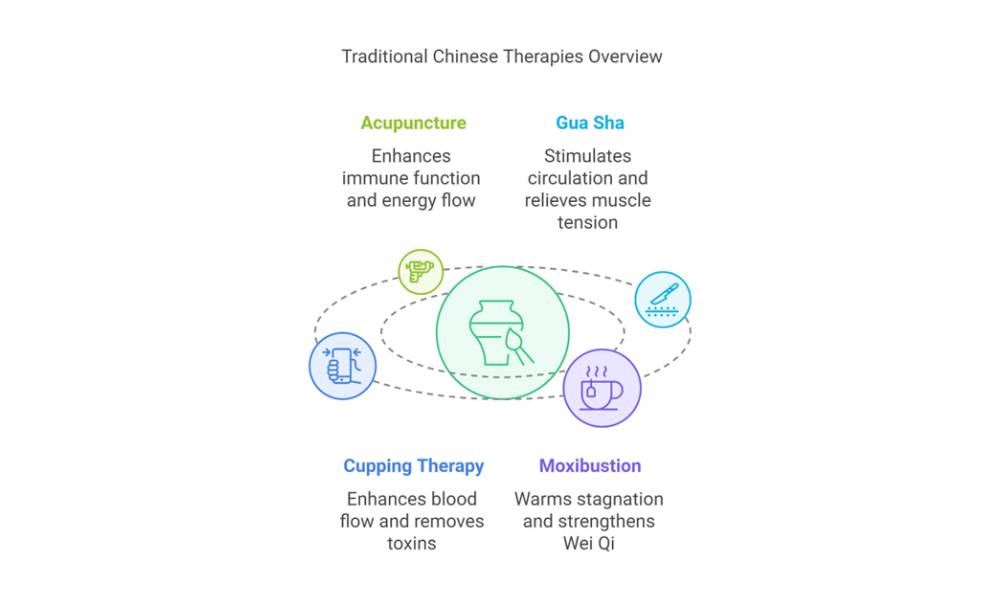
Acupuncture
Some acupuncture points, such as LI4 (Hegu) and ST36 (Zusanli), can help the immune system. They also reduce inflammation and improve energy flow. Research shows that acupuncture might shorten colds and lessen their symptoms.
Gua Sha
Using a smooth tool to scrape the skin can help get blood moving and clear out germs. This method is good for reducing muscle tightness and can also help with breathing issues.
Cupping Therapy
Cupping creates a vacuum on the skin. This helps blood flow better, removes toxins, and reduces congestion. People often use it for chest colds and coughs. Source: PMC
Moxibustion
Burning mugwort near acupuncture points helps to warm places where energy is blocked. It can also increase your qi and support healing during colder months.
What are some traditional Chinese remedies for treating cold symptoms?
Traditional Chinese remedies for cold symptoms are easy to use and effective. You can drink ginger tea to support your immune system. Steaming with herbs like menthol and eucalyptus can help clear congestion. Eating hot soups that have garlic and onions is also good because of their antibacterial properties. Additionally, acupuncture may help balance your energy and encourage faster healing.
How do Chinese remedies for cold differ from Western medicine approaches?
Chinese remedies for colds work to bring balance to the body’s energy flow. They often use natural ingredients like ginger, ginseng, and different Chinese herbs. These remedies focus on healing the whole body and preventing illness, not just relieving symptoms. This method is different from Western medicine, which mainly uses drugs to treat problems.
How to Fight a Cold with Chinese Medicine
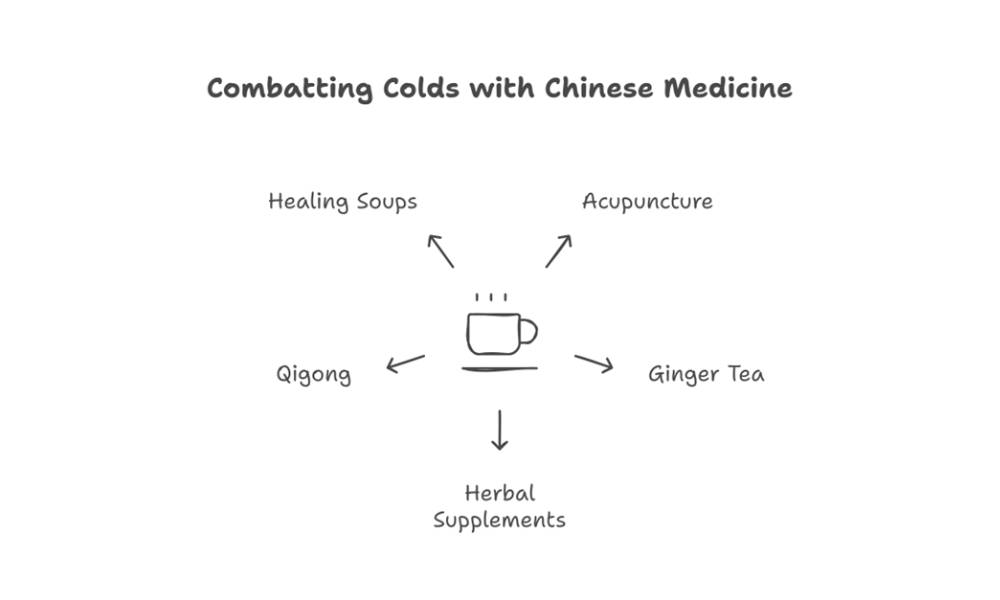
- Use acupuncture to boost your immune system.
- Sip ginger tea to reduce inflammation.
- Try herbal supplements like astragalus to feel more energetic.
- Do qigong to improve your blood flow.
- Have warm soups with healthy herbs such as scallions and garlic.
Dietary Therapy and Nutrition Strategies
Foods for Wind-Cold Symptoms
- Ginger tea: It makes you sweat and keeps you warm.
- Chicken soup with garlic and green onions: This soup gives you nutrients and also warms you up.
- Congee with ginger: A soft dish that heals and boosts your energy.
Foods for Wind-Heat Symptoms
- Chrysanthemum tea: It can lower fever and cool your body down.
- Pears: They can ease sore throats and keep you hydrated.
- Watermelon juice: It cools your body when you feel too hot.
Therapeutic Soups
- Soups with goji berries, jujube fruits, and mushrooms keep us hydrated. They also provide us with important nutrients. These soups support our immune system. They are good remedies for the flu.
Preventive Measures in TCM
Strengthening Immunity
- Tai Chi and Qi Gong: These practices help improve the flow of Qi and give you more energy.
- Adequate Rest: Resting enough allows your body to heal and supports the immune system.
Environmental Factors
- Avoid drafts.
- Dress appropriately for the season.
- This helps protect you from germs outside.
Modern Insights and Research
Integration with Western Medicine
Combining TCM with conventional medicine provides a synergistic approach to cold and flu treatment. While TCM addresses the root imbalances within the body—such as disturbances in Qi and Yin-Yang harmony—Western treatments focus on managing acute symptoms like fever, congestion, and inflammation. This dual approach can improve recovery time and enhance overall efficacy. For example, integrating TCM therapies such as acupuncture and herbal formulas with antiviral medications can reduce side effects and improve patient outcomes.
Moreover, Western medicine increasingly recognizes the value of TCM’s preventive strategies. Practices like Qi Gong, dietary adjustments, and herbal tonics offer long-term benefits in boosting immunity and reducing susceptibility to respiratory illnesses.
Scientific Validation
Growing scientific research supports the efficacy of TCM for cold and flu recovery. Meta-analyses and randomized clinical trials have demonstrated that TCM herbs such as honeysuckle (Jin Yin Hua) and forsythia (Lian Qiao) possess potent antiviral and anti-inflammatory properties. For instance, Yin Qiao San has been shown to significantly reduce the duration and severity of flu symptoms.
Additionally, studies on acupuncture confirm its role in improving immune function by modulating inflammatory responses and enhancing the production of white blood cells. Modern biochemical analysis also highlights the immune-boosting effects of traditional formulas like Yu Ping Feng San (Jade Windscreen Powder), which stimulates defensive Qi while reducing the risk of infection.
Research continues to bridge the gap between traditional and modern practices, with ongoing studies exploring how specific combinations of herbs, therapies, and Western treatments can deliver the best outcomes for patients facing seasonal illnesses.
Conclusion
Chinese remedies for colds and flu use a complete approach. They combine different types of Chinese herbs and herbal formulas. This also includes changing your diet and visiting an acupuncturist. Their method targets the main causes of sickness and aims to boost your immune system. Traditional Chinese Medicine (TCM) provides effective ways to prevent and recover from illness. Using these strategies in your health routine can help you feel stronger during cold and flu season.