


Joint Pain, TCM
Rediscovering Bone Health through Traditional Chinese Medicine and Chinese Herbal Solutions

Sep
As you enter the golden age, the natural process of ageing can bring about challenges that affect your mobility, independence, and overall quality of life. During this phase, conditions such as osteoporosis and arthritis tend to become more prevalent, impacting your bones and joints. Osteoporosis causes bones to become brittle and porous, leading to painful and debilitating fractures from even minor falls. Meanwhile, arthritis erodes cartilage and causes inflamed joints, stiffening the body and making movement difficult.
However, the foundation of sustainable bone health lies in proactive early care. Traditional Chinese Medicine (TCM) offers valuable insights into maintaining strong and healthy bones. Chinese medicine emphasises the balance of energies within the body for optimal functioning. This article delves into the TCM perspective on bone health, exploring the underlying causes of weak bone health and the ancient herbal solutions it offers.
The TCM Perspective on Bone Health
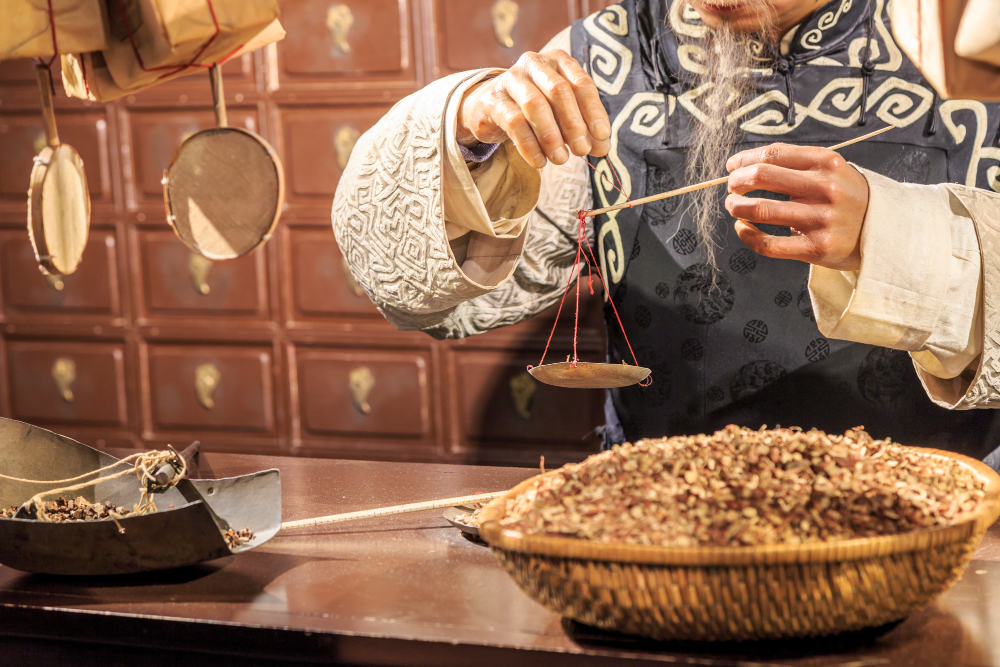
TCM practitioners have a unique perspective on bone health that differs from Western medicine. They believe the health of bones is closely related to the concepts of Qi (vital energy), blood circulation, and the balance of Yin and Yang within the body. In this paradigm, the Kidneys hold a pivotal position as the bedrock of vitality and are of utmost significance in promoting robust bones. It is in the kidneys that the bone’s marrow is developed. The concept of Kidney Essence, often referred to as “Jing”, is believed to provide the fundamental energy necessary for the growth, development and maintenance of strong bones as a person ages.
Uncovering the Causes of Weak Bone Health

From a TCM perspective, several factors contribute to weak bone health. These factors encompass both internal imbalances within the body’s energetic systems and external influences that disrupt harmony. Understanding these causes allows for a comprehensive approach to maintaining and enhancing your bone health. Let’s delve into these causes in more detail along with its remedies:
Weak Kidneys
As previously mentioned, kidneys play a crucial role in maintaining bone and joint health. These vital organs regulate mineral balance within the body, including essential minerals such as calcium and phosphorus. These minerals are paramount for maintaining the strength and health of our bones. If the proper functioning of the kidneys is disrupted, it can lead to an imbalance in what is referred to as kidney essence in TCM. This imbalance can have far-reaching effects on various aspects of health, including poor bone health. To strengthen kidney essence, TCM suggests using herbs such as:
Eucommia Bark (Duzhong)
Eucommia Bark or known as “Duzhong”, is a common herb that is utilised in TCM for bones and joints by nourishing the kidneys. This herb contains compounds such as iridoids and flavonoids which have the potential to strengthen bones and promote skeletal health.
Astragalus Root (Huang Qi)
Astragalus root is another herb often used in TCM to support kidney function. It is believed to have immune-modulating and anti-inflammatory properties, which can indirectly contribute to overall health. Supporting kidney function indirectly aids in maintaining healthy bones and joints.
Goji Berries (Gou Qi Zi)
Goji berries are known for their high antioxidant content and are considered a tonic in TCM. They are believed to support various bodily systems, including the kidneys.
Yin and Yang Imbalance
Yin and Yang are fundamental concepts in Chinese philosophy and culture, particularly within the framework of Taoism. They represent the dualistic nature of existence, illustrating how opposite forces or elements are interconnected and interdependent. Our body is seen as a system in which various organs and functions are associated with either Yin or Yang qualities. Imbalances in Yin and Yang can have negative effects on bone health. A deficiency in Yin can lead to weakened bones, reduced bone density, and a lack of proper nourishment for bone tissue. This might make bones more prone to fractures and slow down the healing process. On the other hand, a Yang deficiency can affect the bone’s functional aspects, leading to decreased mobility, stiffness and poor blood circulation around the bones. These imbalances can potentially contribute to conditions like osteoporosis, arthritis and other bone-related disorders. In TCM, various herbs are used to help balance Yin and Yang energies within your body, including:
Rehmannia Root (Shu Di Huang)
Rehmannia Root or “Shu Di Huang” in Chinese, is considered an important herb for nourishing the Yin energy and supporting the kidneys. It is effective TCM for bone health by providing essential nutrients and moisture to bones and connective tissues, promoting their strength and flexibility.
Cinnamon Bark (Rou Gui)
Another herb frequently used is Cinnamon Bark, also known as “Rou Gui”. While it is important to note that this herb is more commonly associated with Yang energy due to its warming properties, its role in TCM might involve supporting Yang energy and promoting circulation, which can indirectly contribute to maintaining bone health.
Qi Stagnation
In TCM, Qi is closely linked to the concept of blood. Blood, in this context, encompasses not only the physical blood but also the body’s overall circulation and nourishment. Qi and Blood work together to maintain harmony within the body. When Qi stagnation occurs, it can disrupt the smooth circulation of Blood, leading to inadequate nourishment to various parts of the body, including bones and joint pain in TCM. Proper circulation of Qi and Blood is necessary for maintaining your bone well-being, as it requires nutrients and energy to stay strong. Fortunately, in the realm of Chinese herbal remedies, recommended herbs can effectively enhance the circulation of Qi. The following are some of them:
Bupleurum (Chai Hu)
Bupleurum, commonly known as Chai Hu, is a plant that holds significance in traditional herbal medicine systems, particularly in East Asian countries such as China, Japan and Korea. It is often used as part of herbal formulas to address conditions related to Qi stagnant. In TCM theory, Chai Hu is thought to have a “spreading” quality, helping to regulate the flow of Qi and alleviate stagnation.
Citrus Peel (Chen Pi)
Citrus peel, known as “Chen Pi” in Chinese medicine, refers to the dried and aged peels of various citrus fruits, commonly mandarin orange or tangerine. Like Bupleurum, Chen Pi is thought to have the ability to regulate the flow of Qi in the body. Promoting the smooth flow of Qi is believed to help alleviate stagnation and discomfort.
White Atractylodes (Bai Zhu)
Other than that, White Atractylodes, also called “Bai Zhu” in Chinese term, emerges as a potent herbal remedy with a rich history of therapeutic applications. Bai Zhu is considered to have a tonifying effect on the body’s Qi. It is sometimes used to boost overall energy levels and enhance physical vitality.
Exposure to Dampness or Cold
Based on TCM, exposure to dampness and cold can negatively affect your body’s bone health. Cold temperatures can cause constriction of blood vessels and reduce blood flow to the extremities and bones. This diminished blood circulation can lead to stiffness, discomfort, and even bone and joint pain. Prolonged exposure to cold and damp conditions can also weaken the immune system, making the body more susceptible to infections that can affect bone health. Several herbs are known for their warming properties and ability to dispel cold from the body. Here are a few examples:
Cordyceps
Cordyceps is a well-known TCM herb that is believed to have warming properties. It is often used to tonify the kidneys and lungs. This herb is believed to strengthen the body’s internal “fire” (metabolic activity) to counteract the effects of cold or dampness, which can help improve blood circulation and bone health.
Licorice Root (Gan Cao)
Licorice root is frequently used in TCM formulas to harmonise other herbs and alleviate symptoms caused by cold and dampness. It is believed to support the spleen, soothe the stomach and enhance Qi circulation. This contributes to maintaining warmth and balance in your body.
Conclusion
Incorporating TCM principles into joint and bone health management offers a comprehensive approach to maintaining strong and resilient bones. You can enhance your overall bone health and well-being by nurturing kidney essence, balancing Yin and Yang, promoting Qi circulation, and countering external factors. Traditional Chinese herbal solutions offer many options to address these factors and promote bone vitality. If you’re interested in exploring these solutions, Tong Jum Chew stands out as one of the leading providers. Our supplements blend ancient herbal wisdom with modern wellness methods, making it easier than ever to prioritise your bone health journey.