


Blogs, Stress & Anxiety, TCM
Why Do You Wake Up Easily at Night? A TCM Perspective on Light Sleep and Fragmented Sleep
Jan
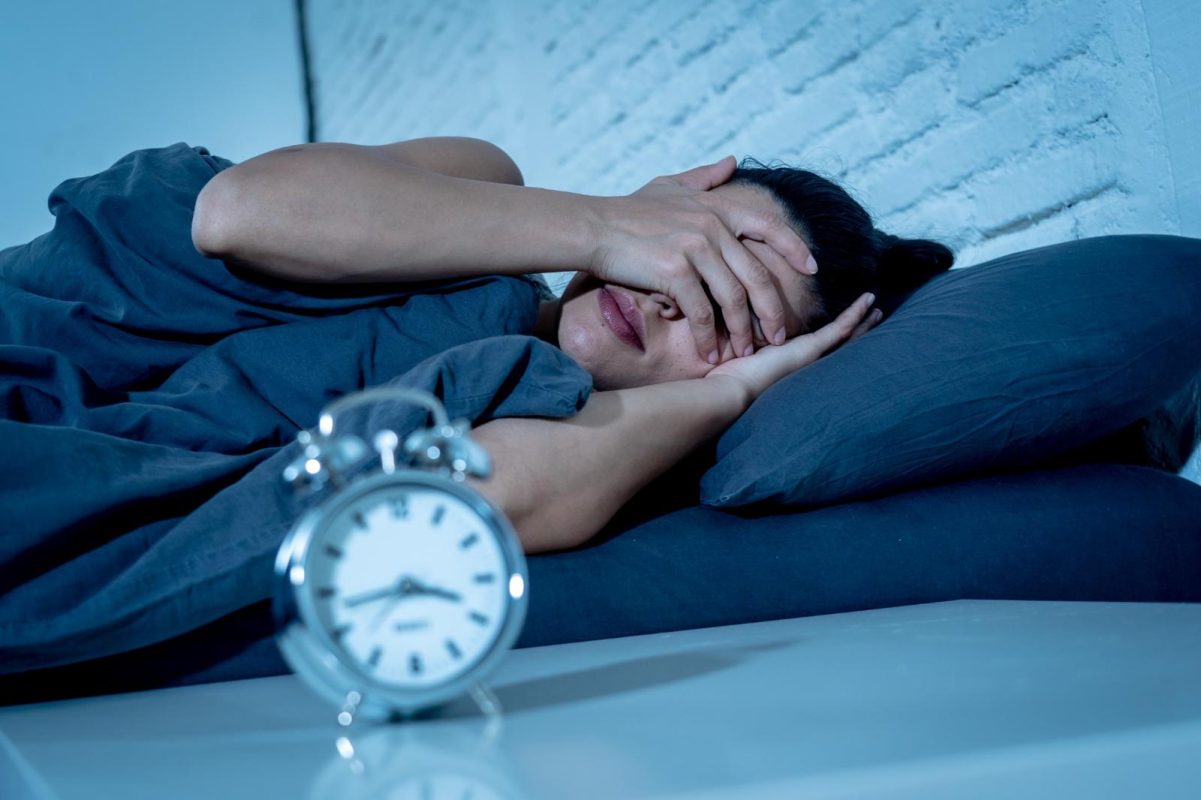
Many people do not fall into what is traditionally considered “insomnia.” They are able to fall asleep, yet their sleep remains light and fragile throughout the night. They wake easily in response to sounds, movement, or their own thoughts, and often require time to fall back asleep again. By morning, although the total number of hours slept may seem sufficient, they wake up feeling only partially rested—as if their body never fully entered deep recovery.
TCM practitioners often call this “light sleep” or “restless sleep,” rather than insomnia.
TCM clinics see this pattern of shallow sleep and night waking very often. It is especially prevalent among individuals who internalise emotions, experience prolonged mental or emotional pressure, maintain fast-paced lifestyles, or carry a strong sense of responsibility. It is also frequently observed during the peri-menopausal period and among older adults.
How Is Light Sleep Different from Insomnia?
From a lived experience perspective:
- Insomnia refers primarily to difficulty falling asleep
- Light sleep refers to sleep that is entered but not deep enough
- Night-time awakening refers to sleep that begins but cannot remain stable
Modern sleep medicine typically classifies this as a sleep maintenance issue, not a sleep initiation problem. Many people do not immediately recognise it as a sleep disorder because they are technically “able to sleep.”
TCM, however, offers a more nuanced explanation. A classical concept states:
“When Yang fails to properly enter Yin, sleep becomes unsettled.”
This means that during the night, Yang energy does not withdraw fully inward, leaving sleep superficial and easily disturbed.
Waking Easily at Night ≠ Insomnia: Understanding the Difference Matters
Not all sleep problems are the same, and distinguishing them is essential:
-
Insomnia: difficulty falling asleep or persistent inability to initiate sleep
-
Light sleep: falling asleep but remaining in a shallow, unstable state
-
Night-time awakening: repeated waking during the night or early morning, with difficulty returning to sleep
👉 If you are able to fall asleep but feel that your sleep is light, fragmented, or easily interrupted, this differs from classical insomnia. For a deeper understanding of insomnia from a TCM perspective, you may refer to Tong Jum Chew’s related article:👉 Insomnia from a TCM Perspective
Why Is Sleep Light and Easily Interrupted?
Light sleep and frequent night awakenings are rarely caused by one single factor. More often, they reflect several layers working together — how we process stress, how the nervous system stays “on guard,” and how well the body can sustain night-time recovery. In TCM, this is not simply a problem of “not sleeping,” but a question of whether the body can settle, contain, and restore through the night.
Below are the most common contributing patterns — described through both a modern lens and a Traditional Chinese Medicine (TCM) framework.
1) Stress and Unprocessed Emotions: “Busy by Day, Awake by Night”
Many people function well during the day, then become mentally active once they lie down. Daytime responsibilities (work, family roles, caregiving, constant decision-making) leave little room to digest emotions. At night, when the environment finally quiets, the mind starts to “catch up.”
Psychologists call this rumination—when the mind replays worries and unfinished thoughts at night.
TCM has a vivid way of describing this dynamic: the Liver supports emotional flow and internal regulation. When emotions stay constrained for too long, the system becomes less “smooth,” and sleep becomes easier to disturb.
This pattern commonly shows up as:
- frequent dreams
- emotionally charged or vivid dreaming
- waking with a suddenly alert mind
- startling awake without a clear external trigger
From a TCM perspective, this often aligns with Liver Qi constraint (emotional stagnation) and, in some people, a shift toward internal heat when that constraint persists.
2) Night-Time Hyper-Alertness: When the Body Sleeps but the Brain Keeps Scanning
When stress remains chronically elevated, the nervous system may not fully downshift at night. Even if you fall asleep, your system stays partially alert — light noise, small movements, or a brief thought can be enough to bring you back to wakefulness.
This pattern is especially common among people who are:
- high-responsibility or high-pressure achievers
- emotionally self-contained (used to “holding it in”)
- perfectionistic or constantly self-monitoring
- in the peri-menopausal stage
- caregivers supporting children, parents, or family members
In plain terms, it feels like: the body is asleep, but the mind is still doing night duty.
People often report:
- falling asleep without major difficulty
- waking suddenly in the middle of the night
- feeling their heart race, chest feel tight, or thoughts start moving immediately
In TCM, this presentation is often connected to disturbance of the Heart Spirit / Mind — when the mind and spirit cannot fully settle, sleep may start normally but cannot remain stable.
3) Reduced Night-Time “Holding Power”: The Body Can’t Maintain Deep Recovery
Deep, uninterrupted sleep requires more than falling asleep — it requires enough internal “capacity” to stay in restoration mode. TCM places strong emphasis on this night-time holding power.
In TCM, stable sleep relies on coordinated functions such as:
- the Kidney, associated with stored essence and recovery capacity
- the Heart, associated with emotional steadiness and the mind’s settling
- the Liver, associated with smooth regulation by day and proper withdrawal by night
That is why in TCM clinic consultations, practitioners often assess sleep in context — not just how long you slept, but how your system behaves around sleep, including:
- daytime stress profile and emotional load
- the timing and pattern of awakenings
- dream intensity and frequency
- sensations of heat, flushing, or night sweating
- life stage transitions (especially peri-menopause)
- tongue and pulse patterns (as part of the overall picture)
A key TCM idea is that the Kidney forms the foundation of night-time recovery. When Kidney Yin or Kidney Qi is depleted — whether through long-term overwork, chronic stress, aging, or hormonal transition — the body becomes less able to “hold” sleep. As a result, deep sleep becomes fragile, and awakenings become more frequent.
This is also why light sleep, early waking, and fragmented nights are commonly reported in peri-menopausal women and older adults.
4) Heart–Kidney Disharmony: A Classic TCM Pattern Behind “Sleep–Wake–Sleep”
In TCM, the Heart and Kidney should support each other: the Heart’s activity settles, and the Kidney’s deep reserve anchors and restores. When this coordination is disrupted — often described as Heart–Kidney disharmony — sleep may become repeatedly interrupted.
This pattern commonly includes:
- waking multiple times at night
- feeling internally restless or irritable
- excessive dreaming
- difficulty returning to sleep once awake
For people who describe their nights as “I keep waking up and drifting back, then waking again,” this is one of the most frequently discussed TCM mechanisms.
5) Yin–Yang Imbalance: When Yang “Floats,” Deep Sleep Becomes Difficult
In TCM, sleep depends on Yin becoming stronger while Yang settles inward (阴盛阳潜).
When Yin and Blood are insufficient, or when there is Yin deficiency with internal heat (阴血不足 / 阴虚内热), Yang may not fully return inward—so sleep becomes light and easily disturbed.
This pattern is especially common around peri-menopause/menopause, often alongside night sweats, heat sensations, and unstable sleep. From a modern perspective, it is also linked to hormonal changes and night-time awakenings.

Emotional Stress and Sleep: Why Are You Fine in the Day, but Overthinking at Night?
Many people who come in for consultation describe the same pattern:
“I’m fine during the day. But the moment I lie down, my mind starts racing.”
This often happens because the part of you that manages your “daytime interface with the world” — responsibilities, roles, conversations, decisions — has been pushed down or put on hold so you can keep functioning. At night, when the body shifts from action mode into recovery mode, the inner content that was ignored or postponed during the day tends to surface again.
In TCM, there is a clear way to describe this:
The Liver governs free flow and regulates emotions (肝主疏泄,调畅情志).
When the Liver’s free-flow function is disrupted, sleep is more likely to become unsettled. In traditional terms, it may show up as:
-
the spirit/mind does not feel settled (心神不安)
-
Yang does not withdraw smoothly into Yin (阳不入阴)
-
the night becomes restless and sleep feels unstable (夜不安寝)
That is why regulating light sleep is not simply about “sleeping deeper.” It often requires a two-part direction:
release and unwind during the day + calm and settle the mind at night
Modern life creates long-term emotional pressure, yet many people lack a healthy outlet. Emotions that are suppressed in the daytime commonly reappear at night — as vivid dreams, frequent waking, or a mind that becomes unusually alert.
From a TCM perspective, when Liver Qi becomes constrained and emotional flow is impaired, the Hun (魂) may not anchor and settle properly. As a result, the night becomes naturally less stable. This also explains why many people with light sleep feel “okay” during the day, yet find themselves unable to stop thinking at night.
Why Does High Stress Make Sleep Lighter?
From a modern medical perspective, light sleep and frequent night-time waking are often linked to the autonomic nervous system remaining in a long-term state of heightened alertness. Even when you are asleep, the brain may stay unusually sensitive to the environment—small sounds, subtle movement, or minor internal sensations can be enough to wake you.
Sleep Foundation also notes that stress and increased nervous system arousal are among the key contributors to repeated night awakenings. This aligns closely with the TCM understanding that, under sustained pressure, Yang may become harder to contain, and the mind may not anchor securely—often described as “Yang not staying inward (阳不内守) and the spirit/mind not being well-stored (神不安藏).”
Night-Time Sleep and the Yin–Yang Shift in TCM
TCM describes sleep with a classic principle:
“When Yang enters Yin, sleep occurs; when Yang exits Yin, waking occurs.”
(阳入于阴则寐,阳出于阴则寤)
This highlights that sleep is fundamentally a Yin–Yang transition:
-
Daytime: Yang moves outward → to respond, act, and engage with the world
-
Night-time: Yang withdraws inward → to calm the mind and settle the spirit
If Yang cannot return inward smoothly, sleep tends to remain light.
If Yang is pulled outward too easily, waking can happen suddenly.
In modern language, this can be understood as:
-
the switching between parasympathetic and sympathetic dominance
-
the shift from a daytime “action system” into a night-time “recovery system”
Light Sleep vs. Insomnia: TCM Makes Finer Distinctions
Many people assume that light sleep is simply “insomnia.” In TCM, however, sleep concerns are described more precisely—because the pattern matters, and clearer differentiation leads to a more targeted direction of regulation.
| What You Experience | TCM Perspective |
|---|---|
| Difficulty falling asleep | Yang does not enter Yin (阳不入阴) |
| Sleep feels light / shallow | Yang enters but not deeply (阳入而不深) |
| Waking easily | Yang rises too easily / is easily disturbed (阳出而易扰) |
| Waking and struggling to fall back asleep | The spirit/mind has not settled (神未安) |
| Excessive dreaming | Disrupted Liver regulation or unsettled heart spirit/mind (肝失疏泄 / 心神不安) |
| Peri-menopause night waking | Yin/Blood deficiency or Yin deficiency with internal heat (阴血不足 / 阴虚内热) |
| Night waking in older adults | Weaker Kidney Qi and reduced night-time “holding capacity” (肾气不足、夜不承载) |
The clearer the distinction, the more accurate—and effective—the direction of regulation tends to be.

How Can You Make Sleep More Stable?
In TCM, regulating light and easily interrupted sleep is often approached from three practical directions:
1️⃣ Release and Unwind in the Day (Liver-focused)
The Liver’s role is to:
-
keep Qi moving smoothly
-
regulate emotional flow
If daytime stress and emotions are not released, the system often “processes it” at night instead. Here, release does not mean emotional outbursts—it means restoring smoothness and ease. Helpful ways include:
-
walking
-
breathing practice
-
daylight exposure
-
talking things through
-
rhythmic movement/exercise
-
gentle, honest emotional expression
2️⃣ Calm and Settle at Night (Heart-focused)
Night-time is not ideal for:
-
emotional debates
-
heavy information intake
-
work tasks
-
high-cognitive activities
because the mind struggles to “return inward” afterward.
In TCM, calming the mind is not only about falling asleep—it is about:
giving the mind/spirit (Shen) a place to settle.
When the mind/spirit (Shen) is settled, the body is more able to enter deeper restoration.
3️⃣ Build Night-Time “Holding Power” (Kidney-focused)
Restorative capacity is rooted in Kidney Qi—often described as:
“the Kidney is the foundation of vitality.”
When Kidney Qi is strong:
-
sleep holds through the night
-
recovery and repair are supported
-
you wake feeling clear and refreshed
When Kidney Qi is weaker:
-
waking happens repeatedly
-
sleep feels fragile and unsteady
-
mornings feel unrested
This pattern is especially common in older adults and during peri-menopause/menopause.
Three TCM Approaches to Regulating Light Sleep
From a TCM perspective, light sleep and frequent night-time waking are rarely caused by a single organ system. They are more often the result of poor coordination between the Liver, Heart, and Kidney. That is why regulation typically needs to address three layers at the same time—the root, the manifestation, and the foundation—rather than focusing only on the surface symptom of “not being able to sleep.”
① Soothing the Liver and Releasing Constraint (Addressing the Root)
In TCM, it is said:
The Liver governs free flow, regulates emotions, and stores the Hun(魂) (the ethereal aspect associated with night-time settling).
Whether emotions are properly released in the daytime directly affects whether the mind and spirit can settle and “return inward” at night. When Liver Qi becomes constrained and the free-flow function is impaired, emotions suppressed during the day often reappear at night—showing up as vivid dreams, frequent waking, and a mind that won’t switch off.
Therefore, regulating light sleep often begins with creating a healthy outlet for emotions during the day, so that the night can become genuinely calmer and more stable.
In TCM, commonly used herbs associated with this “soothing the Liver and releasing constraint” direction include:
- Bupleurum (柴胡): soothes the Liver, relieves constraint, and promotes the smooth movement of Qi
- Cyperus (香附): regulates Qi and relieves constraint, often used when tension, frustration, or emotional tightness is prominent
- Curcuma (郁金): moves Qi and relieves constraint, especially when emotional stagnation and Qi blockage coexist
This approach focuses on restoring smoothness rather than suppressing emotions, laying a foundation for more settled sleep at night.
In practice, when light sleep is accompanied by clear signs of emotional heaviness, chest tightness with frequent sighing, reduced appetite, or stress-related discomfort, TCM practitioners often start by regulating Liver Qi. Within this framework, one example is Nature’s Green Bupleurum Liver Soothing Tablets, which are positioned in TCM terms to support Liver Qi regulation and relieve discomfort associated with Liver Qi constraint—helping to create better conditions for night-time stability.
② Calming the Mind and Settling the Heart (Addressing the Manifestation)
Whether sleep feels stable through the night largely depends on whether the Shen (mind/spirit) has a place to settle. When the Heart and Shen are unsettled, a person may be able to fall asleep, yet still wake repeatedly during the night.
A key point to clarify is this:
in TCM, “calming the Shen” does not mean making someone fall asleep immediately.
The real purpose of calming the Shen is to:
- stabilise the mind and spirit
- smooth emotional fluctuations
- support night-time Yang withdrawal (so the body can “return inward”)
- reduce how easily sleep is disturbed by external stimuli or internal thoughts
In TCM, commonly used herbs associated with this calming direction include:
- Ziziphus Seed (酸枣仁): nourishes the Heart and calms the Shen; often used for restlessness and excessive dreaming
- Biota Seed (柏子仁): nourishes the Heart and calms the Shen; also supports Yin/Blood insufficiency patterns
- Polygala Root (远志): connects the Heart and Kidney, helping the Shen settle and return inward
For people who feel emotionally tense, mentally overactive, and prone to waking easily at night, TCM practitioners usually include calming-Shen formulas as part of a broader regulation plan instead of treating them as a stand-alone “sleep fix.” For example, Nature’s Green Goodnight Capsules and Nature’s Green Zizyphus Good Night Tablets support a TCM direction of calming the Heart Spirit / mind and smoothing emotional fluctuation. Rather than aiming for rapid sedation, they help the mind settle so night-time recovery rhythms stay more consistent—reflecting the TCM principle of easing symptoms without disrupting the body’s normal balance.
③ Nourishing Yin and Supporting the Kidneys (Addressing the Foundation)
A classical TCM principle states:
“The Kidney stores essence and forms the foundation of vitality.”
Whether someone can sleep continuously “until morning” is closely related to the body’s night-time holding and recovery capacity, and in TCM, this capacity is strongly rooted in the Kidneys.
When Kidney Qi or Kidney Yin is insufficient, common patterns may include:
- waking easily during the night
- difficulty falling back asleep after waking
- waking in the morning still feeling fatigued
- noticeably lighter sleep during peri-menopause/menopause
Therefore, regulating light sleep often needs to include nourishing Yin, supporting the Kidneys, and strengthening night-time holding capacity.
In TCM, representative herbs commonly associated with this direction include:
- Prepared Rehmannia (熟地黄): nourishes Yin and Blood; supports Kidney essence
- Cornus Fruit (山茱萸): supports the Liver and Kidneys and helps with “holding” and stability
- Goji Berry (枸杞子): nourishes the Liver and Kidneys, supports Yin and essence
This layer of regulation is typically more constitutional and long-term, and is especially relevant for peri-menopausal women and older adults.
(The above is a TCM-theory-based explanation for health education purposes and does not constitute medical advice.)

Conclusion: Bring Sleep Back to Its Rhythm
Through years of TCM practice and product development, we have stayed consistent on one point: you cannot “force” sleep. Sleep happens naturally when your emotions, organ functions, and daily rhythm work together in balance.
Waking easily at night and sleeping lightly does not automatically mean something is “broken.” More often, your body is sending you a signal:
- Did you release daytime stress properly?
- Have you kept your mind and spirit in a long-running state of tension?
- Have you been drawing down your night-time recovery capacity for too long?
That is why TCM regulation of light sleep is never only about “being able to fall asleep.” Instead, it works step by step across three connected layers—soothing the Liver to release constraint, calming the Heart Spirit / mind, and nourishing Yin to support the Kidneys—so your body can return to a steadier night-time rhythm.
Guided by these principles, Nature’s Green develops formulas for pattern-based support and long-term regulation. Each formula plays a role inside a broader regulation approach. Rather than pushing rapid sedation, Nature’s Green focuses on helping the body move gradually toward a more stable and sustainable night-time state.
As a long-established TCM brand with over 60 years in Singapore, Tong Jum Chew Pte Ltd not only supplies and develops TCM products, but also operates TCM clinics staffed by professional physicians, offering guidance that is closer to individual constitution and real-life needs. You may visit our store locator page to find our clinics and retail outlets across different areas.
We believe that lasting improvement in sleep comes from understanding and respecting the body’s rhythm—not suppressing wakefulness. When Liver flow becomes smoother, the Shen settles more easily, and the body’s night-time holding capacity strengthens, sleep naturally shifts from “waking again and again” toward being deeper, steadier, and more restorative.
If you are experiencing light sleep and frequent night-time waking, you are welcome to begin by listening to what your body is signalling and choosing a direction that fits your current state. You may also visit the official website of Tong Jum Chew Pte Ltd for more TCM-based health education and product information.
We also offer worldwide shipping, so you can access relevant products and information wherever you are—making TCM regulation more practical and truly part of daily life. (For shipping coverage and details, please refer to the website information.)